MCAA North America Meeting 2025: Strengthening transatlantic collaboration
In November 2025, the MCAA North America Chapter (since divided into the MCAA United States of America (USA) and Canada Chapters) organised a regional in-person MCAA North America Meeting in Chicago, USA. Researchers, alumni, Board members and leaders came together to share their MCAA stories, explore EU funding, and strengthen transatlantic research ties between Europe and North America.
A milestone moment
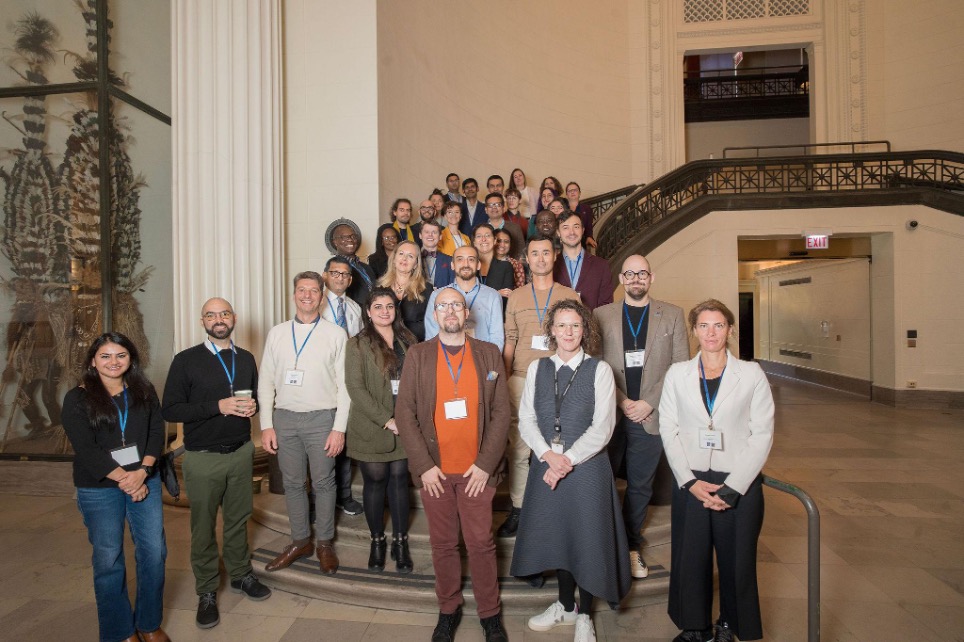
On 6–7 November 2025, the Marie Curie Alumni Association (MCAA) North America Chapter (since divided into the USA and Canada Chapters) reached an important milestone by holding an in-person regional meeting. Hosted at the Field Museum in Chicago, the event brought together MSCA alumni, graduate students, postdoctoral researchers, policymakers, and early-career faculty from across North America and Europe.
For many participants, this was more than a conference. It was the first time they met fellow Marie Curie alumni face to face after years of online interaction. Across disciplines and career stages, a shared feeling emerged early on: we are not alone.
Why Chicago mattered
In 1921, Marie Skłodowska-Curie visited the city to receive honorary degrees from the University of Chicago and Northwestern University. During that visit, women from Chicago raised $100,000 to support her research, reflecting the city’s long-standing commitment to science, philanthropy, and international exchange.
That legacy was echoed a century later at the Field Museum, which generously hosted the event. The museum setting reminded participants that research does not exist in isolation, but connects to society through education, culture, policy, and public engagement.
Leadership and vision
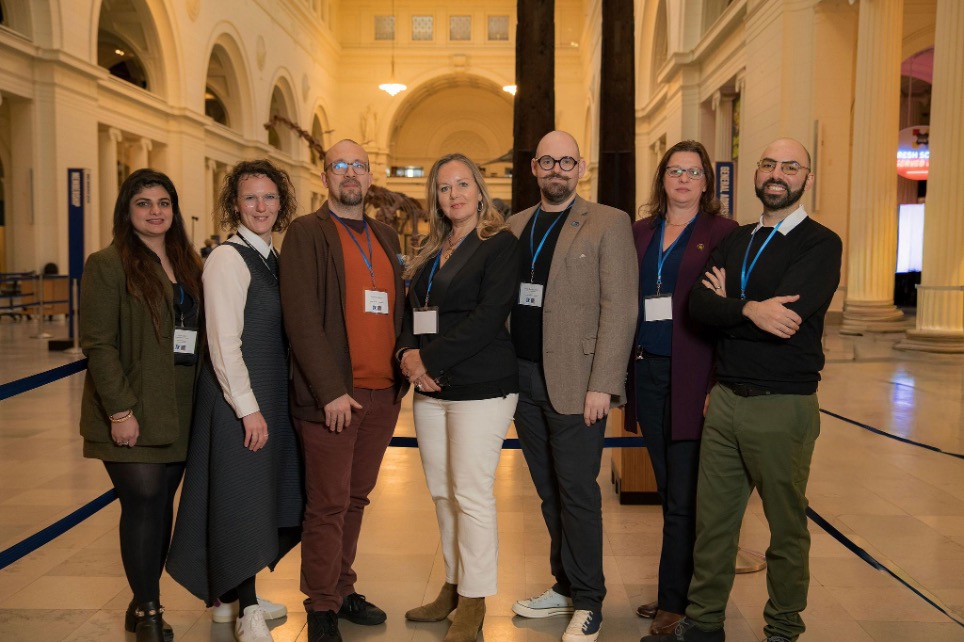
The meeting reflected the shared vision of the MCAA North America (now USA) Chapter Board, led by Sabina Cveček (Chapter Chair), together with the Chair of the newly formed Canada Chapter, Sergio Crespo-Garcia, Jackson Howard from EURAXESS North America, and other Chapter Board members, who worked to create a welcoming and inclusive space for exchange. The event also featured the MCAA Chair Gian Maria Greco, who emphasised the importance of sustained dialogue between European and North American research communities. Welcome remarks from representatives of the Field Museum, the Consulate General of France in Chicago, the Slovenian Consulate General in Cleveland, and partner institutions reinforced the value of international mobility and cooperation.
Day one: sharing ideas and stories
The first day focused on Chapter members and invited guests. A collaborative workshop linked to the MSCA-GLOPOL project, facilitated by Jackson Howard, encouraged participants to openly discuss challenges and opportunities for transatlantic collaboration. Conversations ranged from institutional barriers to practical ways of supporting researcher mobility.
Later, an interactive workshop on science communication titled How to Tell a Good Story was conducted. The workshop was led by Heather Lynn Barnes of Improv at Work, LLC, in collaboration with the Kellogg School of Management. Through hands-on exercises, participants explored how clear narratives strengthen grant applications, presentations, and interdisciplinary work. The day ended over Lou Malnati’s famous Chicago-style deep-dish pizza, where informal conversations flowed easily, and new connections took shape.
Day two: funding, careers, and community
The second day opened to a broader audience and attracted around 70 participants. An overview of MSCA and ERC funding opportunities offered practical guidance on eligibility, application strategies, and the benefits of choosing Europe as a research destination.
A dynamic series of lightning talks followed, showcasing MSCA-funded projects across the humanities, social sciences, and natural sciences. Short talks on academic and non-academic career paths revealed the diversity of professional journeys shaped by MSCA funding. Many speakers spoke candidly about uncertainty, failure, and growth that their MCAA journey brought in their careers and lives. Hearing these stories resonated strongly with participants, especially early-career researchers.
Learning from each other
In the afternoon, participants took part in an unconference-style session, forming small, participant-led discussion groups around shared interests. Topics emerged organically, ranging from career transitions and grant writing to administrative challenges and mentoring. A round-table discussion later in the day focused on hosting MSCA Global Fellows in North America. Moderated by Sabina Cveček, the discussion brought together representatives from museums, universities, and diplomatic institutions. Speakers highlighted both the intellectual benefits of hosting MSCA fellows and the need for clearer institutional frameworks and administrative support.
What participants took home
Across sessions, participants emphasised community, connection, and resilience. Many shared that seeing others face similar challenges helped reduce isolation and foster confidence. The importance of science communication, transferable skills, and international mobility emerged as recurring themes. By bringing people together in person, the meeting strengthened the MCAA’s role as a bridge between European and North American research ecosystems. It also confirmed the value of alumni-led initiatives beyond Europe, where demand for connection and guidance remains high.
This first in-person gathering laid the foundation for future MCAA activities in the North America region and showed that the Marie Curie spirit continues to thrive.
The event was organised, and the current article is endorsed by the previous MCAA North America Chapter Board: Sabina Cveček (Chair), Cristina Florea (Vice-Chair), Pritam Bose, Iryna Mykhailova, Saša Čaval, Sandra Rebok, Lotan Kraun, and Faria Khan.
This event was supported by: Field Museum of Natural History, EURAXESS North America, Consulate General of France in Chicago, Slovenian Consulate General in Cleveland, University of Chicago’s Institute for the Study of Ancient Cultures & Austrian Cultural Forum in New York.